More Thoughts on Deep Learning
- Steven P
- Feb 17, 2022
- 4 min read

Updated: Apr 3, 2022
My motivation has been pretty low, though it has improved later in the week. One assignment involves posting at least 2 tweets per week that apply to our course. I really dislike twitter, its focus on immediate reactions, and the character limit making nuanced discourse impossible. I also think it is very easy to become overloaded with content to read or watch, which might take away from attaining competence in an area of work.
Still, it probably can be useful to make connections, find resources that like-minded people found useful, and keep up-to-date with the newest industry news and innovations.
I've started keeping a database of links and useful resources using Roam (2019), a web-based app that allows easy linking of related content. I was feeling overwhelmed prior to doing this. There was just too much content to keep up with.

Topic of the Week
I planned on writing about a new topic, but I'm still hooked on deep learning. Next week's topic will be different and probably less academic.
Last week I talked about the interaction between memorisation, deep learning and competence and I had a few more thoughts.
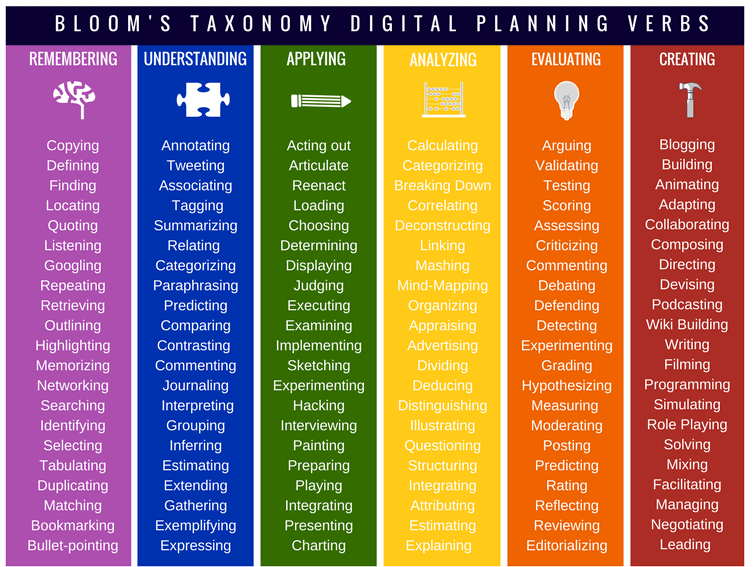
I really liked this table posted on a fellow student's twitter account which summarises the attributes of deep, surface and strategic learning.
Note: Click the image to access the original presentation by Patrice Ludwig from James Madison University.

In the previous blog, the following question arose:
Does performing well in assignments actually exhibit deep learning?
Discussion
The term deep learning came from research into cognitive processing (Craik and Lockhart 1972). Most research defines deep learning as meaningful learning.
[Meaningful learning] is conceptualised as students’ approach to learning with the intentions to understand the meaning of the learning material and to relate new ideas to previous knowledge, driven by an intrinsic motivation to learn. [Transfer of learning] is conceptualised as students’ ability to transfer skills and knowledge to a novel context (Winje and Løndal, 2020).
Other researchers define deep learning as either the transfer of learning, or the prerequisite learning for this transfer to take place.
Tochon (2010) describes another aspect of deep learning, which includes embodied, emotional and social aspect of learning, i.e., relating your learning to your self-identity and role in society. Tochon also refers to deep education, involving both students and educators "working towards an ecological understanding of and responsibility for a sustainable future", and "an orientation towards meaning-making and transformative learning, including development of the students’ identity."
Words and phrases like integration, envelopment, investment and becoming absorbed come to mind. It feels like this is the level of dedication that deep learning and feeling competent would require, though I'm unsure where the line is between this and obsession, or becoming smothered and overwhelmed.
I think the intrinsic motivation part of deep learning is something that is absent or insufficiently discussed in most courses. It isn't enough to assume that because a person is doing a course they are therefore motivated to learn the content deeply. But building one's current identity, or future working identity, around the content and its applications, may be a path forward.
Having a fully formed idea of what job I want after this course would be very beneficial and is something I need to work on. My previous career was a straight path from university to work, so the idea of searching for a job and doing interviews scares me a bit.
So, back to my initial question: does performing well in assignments actually demonstrate deep learning?
Although it would be nice for the answer to be a resounding "YES!", I don't think that is the case. While assignments show the application of knowledge, and therefore demonstrate some understanding, I don't think they demonstrate intrinsic motivation, being absorbed in the content and relating it to previous knowledge and self-identity. One could learn superficially and still perform well, though performing well may be less likely. I think that in order to feel competent, deep learning is required.
However, I think that completing the assignments helps deep learning to occur. So I should probably see assignments as opportunities to learn the relevant material deeply, as well as aiming to perform well academically.
Last Week's Next Steps
Create assignment schedule - Done

Develop broad appreciation of this semester's content - Not done.
Not done but I think having a detailed overview of the content is less necessary as the semester goes on and is something that will occur organically from deep learning. One thing that would be useful is finding the future lecture content that contains topics related to assignments.
Work on lifestyle habits - In progress.
Dietary habits improved and have started back at the gym. Sleep is still off but happy with my current progress overall.
Continue to investigate the interactions of memorisation, learning depth, and competence - In progress.
See Topic of the Week above.
What I Want to Change
No clear idea of what job I want to do after the masters.
I don't feel like I'm developing competence.
Irregular sleeping pattern.
Not much progress on proposal and storyboard.
Next Steps
Start researching jobs, including required competencies and ideal e-portfolio content.
Become more deeply entrenched in the course content and any interesting resources that appear in the twitter assignment.
Try to come up with a system to recognise content that I should learn deeply.
Continue lifestyle changes.
Continue working on proposal, storyboard and wiki assignments.
References
Craik, F. I. and Lockhart, R. S. (1972) 'Levels of processing: A framework for memory research', Journal of verbal learning and verbal behavior, 11(6), pp.671-684, available: https://doi.org/10.1016/S0022-5371(72)80001-X.
Roam (2019) Roam Resarch - A note taking tool for networked thought., available: https://roamresearch.com/ [accessed 16 Feb 2022].
Tochon, F. V. (2010) 'Deep Education', Journal for Educators, Teachers and Trainers, 1(1), 1-12, available: https://dialnet.unirioja.es/servlet/articulo?codigo=3990210 [accessed 17 Feb 2022].
Winje, Ø. and Løndal, K. (2020) Bringing deep learning to the surface: A systematic mapping review of 48 years of research in primary and secondary education. Nordic Journal of Comparative and International Education (NJCIE), 4(2), 25–41. https://doi.org/10.7577/njcie.3798.


Comments